
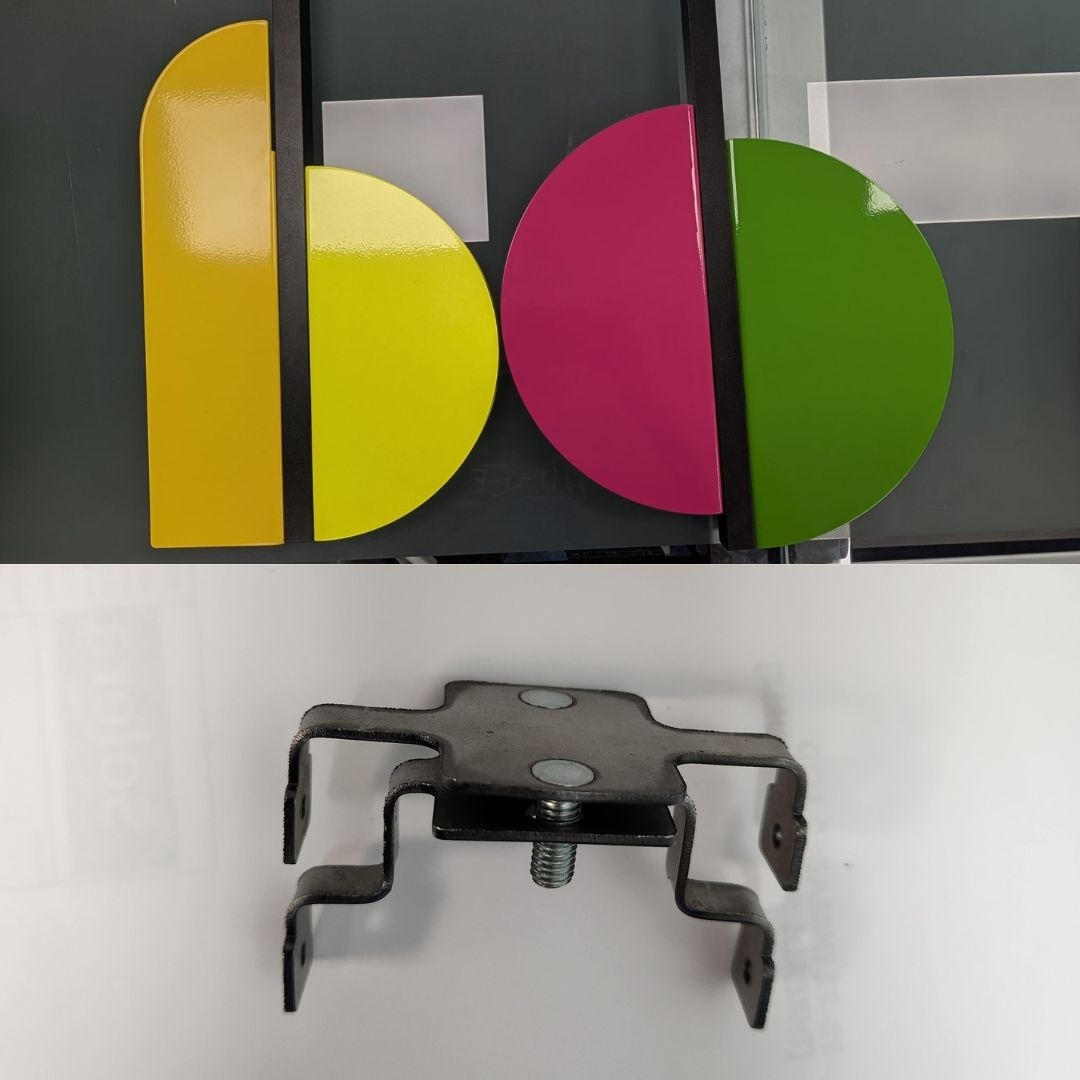
5 key sheet metal bending tips for precision and accuracy include considering minimum flange length, chamfered sides, hole distance from the bend, symmetry, and bends next to each other. Solera Metal Fabrication, a leading metal fabrication facility in Brampton, Ontario, offering metal laser cutting, powder coating services, hydro dipping services and more, explores these 5 key tips and considerations in this blog.
What To Consider During Sheet Metal Bending For Precision?
Minimum Flange Length
Minimum flange length is a key consideration during sheet metal bending. Why? It all comes down to the thickness of the material and the die width. So, if the flange length is too short, it will fall inside the crevice, creating an awkward shape and ruining the precision of the entire process.
Chamfered Sides
In the case of chamfered sides on one or both sides of the flange, the rule of proper flange length still applies. The chamfers themselves must be planned to leave room for the proper bend to take place. If it is not considered, the bend will end up being deformed.
Hole Distance From The Bend
Hole distance is another key consideration during bending sheet metal. If the hole is placed too close to the bend, then the hole runs the risk of being deformed. In this situation, the bolts may not fit properly within the deformed hole.
Symmetry
If the part being manufactured requires symmetry, then make sure that it is perfectly adhered to. This is because if the part is almost symmetrical, then it can create a lot of issues during bending sheet metal.
Bends Next To Each Other
If the design demands successive bends next to each other, make sure that it is feasible by design. It can be a problem because setting the part up after a bend for the next iteration can become challenging.
Conclusion
To conclude, these 5 sheet metal bending tips and considerations ensure a reduction in errors and an improvement in accuracy and precision.
If you are looking for quality sheet metal bending services, Solera Metal Fabrication can help. With decades of experience in metal fabrication in Brampton, Ontario, we also offer metal laser cutting services, powder coating services, and more. Contact us at 905-457-4777 to learn more.
FAQs:
What are the common types of sheet metal bending?
The common types of sheet metal bending include V-bends, U-bends, coining, hemming, bottoming, air bending, step bending, wipe bending, rotary bending and more.
What is bend allowance in sheet metal bending?
Bend allowance in sheet metal bending is defined as the arc length of the neutral axis through a sheet metal bend.